
Crypto tax debate in Berlin: what is currently known – and what is not
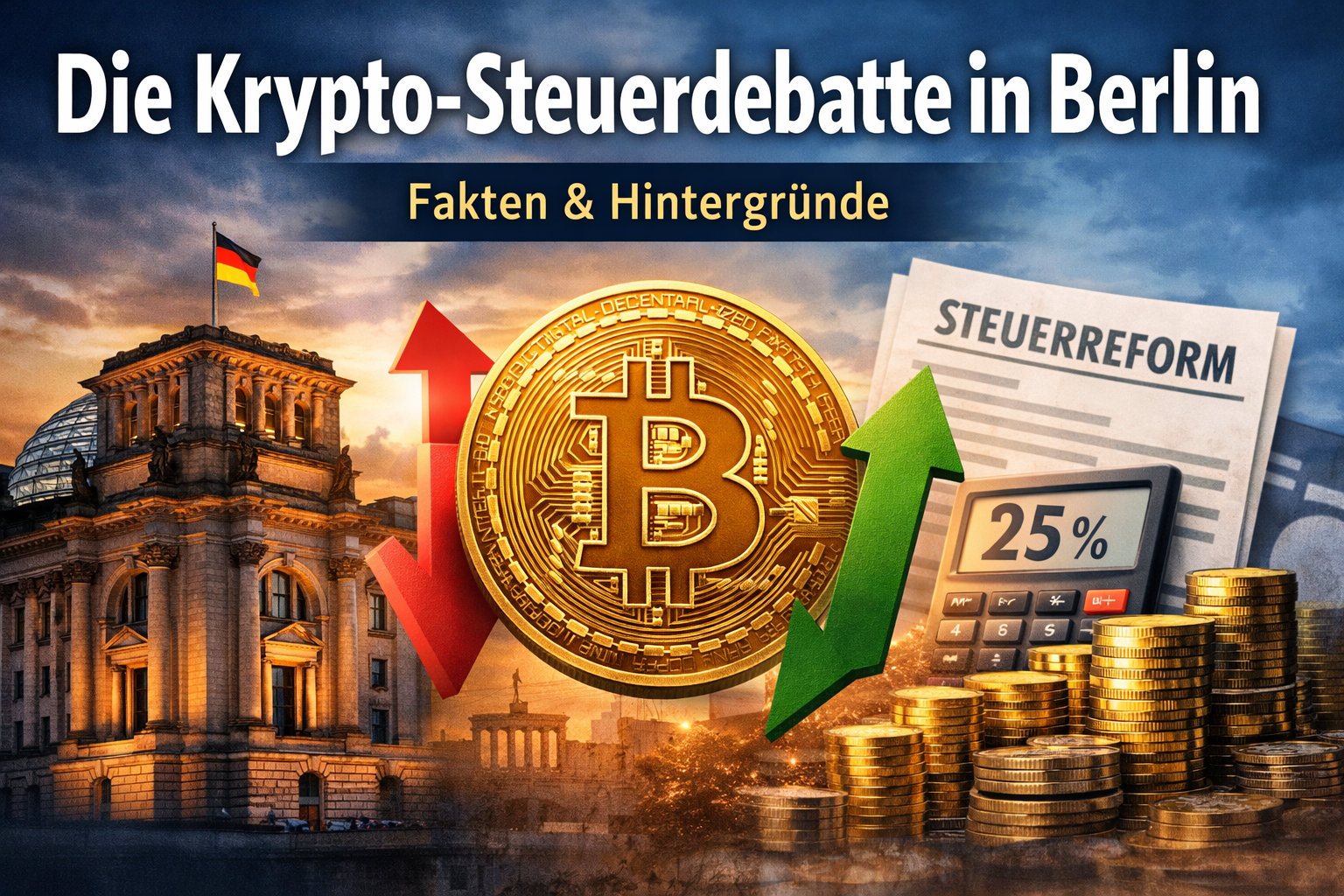
Over the past few days, reports and social media posts have caused considerable unrest in the Bitcoin and crypto community. There are claims that the SPD wants to abolish the tax privileges for Bitcoin and other crypto assets in Germany. Specifically, this concerns the current rule that profits from privately held Bitcoin can generally be realized tax-free after a holding period of more than one year.
The debate is being taken to extremes in some cases. There is talk of a political “deal” that has already been struck, of flat-rate taxation from 2027 and of a political swap deal involving the abolition of the solidarity surcharge. But what of this has actually been confirmed? And what is still speculation?
What exactly is it about?
The starting point of the current discussion is real: in German politics and in parts of the tax policy debate, the one-year holding period for private crypto profits is being viewed increasingly critically. The background to this is the question of whether Germany is taking a special path with this regulation and whether this will result in significant tax losses. A recent analysis by the Centre for Responsible Digitalization (ZeVeDi) from 10 March 2026 argues that the holding period represents a tax privilege and that reform models could generate additional revenue of up to 11.4 billion euros.
The issue has also already reached the parliamentary arena. A Bundestag printed paper explicitly points out that Germany plays a special role within the European Union with the existing holding period regulation. A motion for a resolution also called for a review by June 30, 2026 at the latest to determine whether the holding period should be abolished or whether crypto assets should be classified differently for tax purposes.
This makes it clear that the discussion about a possible change to the taxation of Bitcoin and other crypto assets is not just an invention of social media. It is politically real.
What is currently not documented
As real as the debate is, one should be careful with far-reaching claims. To date, there is no publicly reliable confirmation for several statements currently circulating.
There is currently no public evidence that a binding political deal has already been reached between the SPD and the CDU/CSU, according to which the holding period is certain to fall. Nor is there any reliable official source to suggest that a flat-rate taxation of crypto profits at 25% or 30% has already been decided or agreed between the coalition partners. A concrete legislative link between the abolition of the solidarity surcharge and crypto taxation has also not yet been proven by published government documents or Bundestag documents. For all these points, it is mainly political interpretations, insider reports and exaggerated social media accounts that are circulating – but so far no legally binding resolutions or official drafts.
In other words, there is cause for attention, but not for panic.
DAC8: More transparency does not automatically mean a new crypto tax
In the debate, reference is also often made to the new European reporting obligations for crypto assets. In fact, the implementation of the so-called DAC8 directive has already been decided in Germany. In future, providers of crypto asset services will have to report certain transactions to the tax authorities. The Bundestag passed the corresponding law in November 2025.
However, it is important to note that these new reporting obligations do not automatically create a new crypto tax. DAC8 primarily regulates transparency, data exchange and better enforceability of existing tax obligations. The Federal Central Tax Office describes DAC8 as part of the international exchange of information on crypto assets. A separate material change to tax law would be required to actually abolish the holding period or for a new tax rate.
Anyone who claims that DAC8 automatically means that Bitcoin profits will be taxed at a flat rate in future is mixing up two different levels: the technical reporting infrastructure on the one hand and the material change to tax law on the other.
Why the topic seems politically plausible
The fact that the rumors are getting so much attention at all also has to do with the general political climate. Budget issues, the debate about tax relief elsewhere and the political pressure on the governing parties are ensuring that additional sources of revenue are being sought. In this environment, it seems politically plausible to some observers that special tax rules for Bitcoin and other crypto assets will once again be put to the test. In this context, the ZeVeDi analysis is explicitly cited as an argument for possible additional revenue.
However, plausibility is not yet proof. There is a considerable difference between “conceivable”, “discussed” and “decided”. Especially in emotional debates about Bitcoin, it is therefore worth separating political signals from legal facts.
What counts now
From the perspective of the Bitcoin Bundesverband, the situation must therefore be clearly classified.
Firstly, the debate is real. Anyone who pretends that there is no political movement against the holding period is underestimating the situation. The ZeVeDi study, the Bundestag papers and the public debate show that the taxation of private crypto profits is being politically reassessed.
Secondly, the impression currently conveyed in social media that the decision has already been made is not substantiated as things stand today. To date, there has been no publicly verifiable confirmation of a coalition deal, a fixed tax rate or a decision to abolish the holding period on a specific date.
Thirdly, this is precisely why an objective and well-founded political classification is important now. Anyone who treats Bitcoin like any other short-term speculative object for tax purposes fails to recognize the technological, economic and social significance of this open monetary network. A change in tax law would have a direct impact on investment security, innovation location and long-term planning for private users and companies.
The Bitcoin Bundesverband will continue its efforts to remain in contact with politicians from all democratic parties and to provide factual information. The aim is to provide fact-based information about Bitcoin, how it works, its economic significance and the possible consequences of tax policy decisions. Especially in a heated debate, a direct exchange is needed to dispel misunderstandings and enable sustainable political decisions.
Conclusion
The current excitement is neither pure fantasy nor a done deal. The truth is: The taxation of Bitcoin and other crypto assets is being discussed in Berlin. It is also true that the one-year holding period has come under political pressure. However, there is no evidence to date that its abolition has already been decided or that a corresponding deal has been agreed between the governing parties.
The Bitcoin Bundesverband will follow this development closely and continue to seek discussions with politicians from all democratic parties. By providing factual information, the association aims to help ensure that political decisions on Bitcoin are made on the basis of facts, technological understanding and economic rationality.
Until then: stay alert, make clear distinctions and rely on verifiable facts.